
The brain sends conflicting signals in anorexia
5 November 2026

5 November 2026

What happens in the brain in anorexia? Researchers at the Netherlands Institute for Neuroscience found strong signals that promote eating in brain tissue from people who had died with anorexia. At the same time, a system that suppresses appetite was also strongly active. These conflicting signals provide new clues that may help explain why eating can be so difficult for people with anorexia.
Eating may seem like something that comes naturally: when our body needs energy, we feel hungry and look for food. For people with anorexia, things work very differently. Even when the body is severely starved, eating can be extremely difficult. Researchers at the Netherlands Institute for Neuroscience have now discovered a possible biological mechanism in the brain that may help explain why.
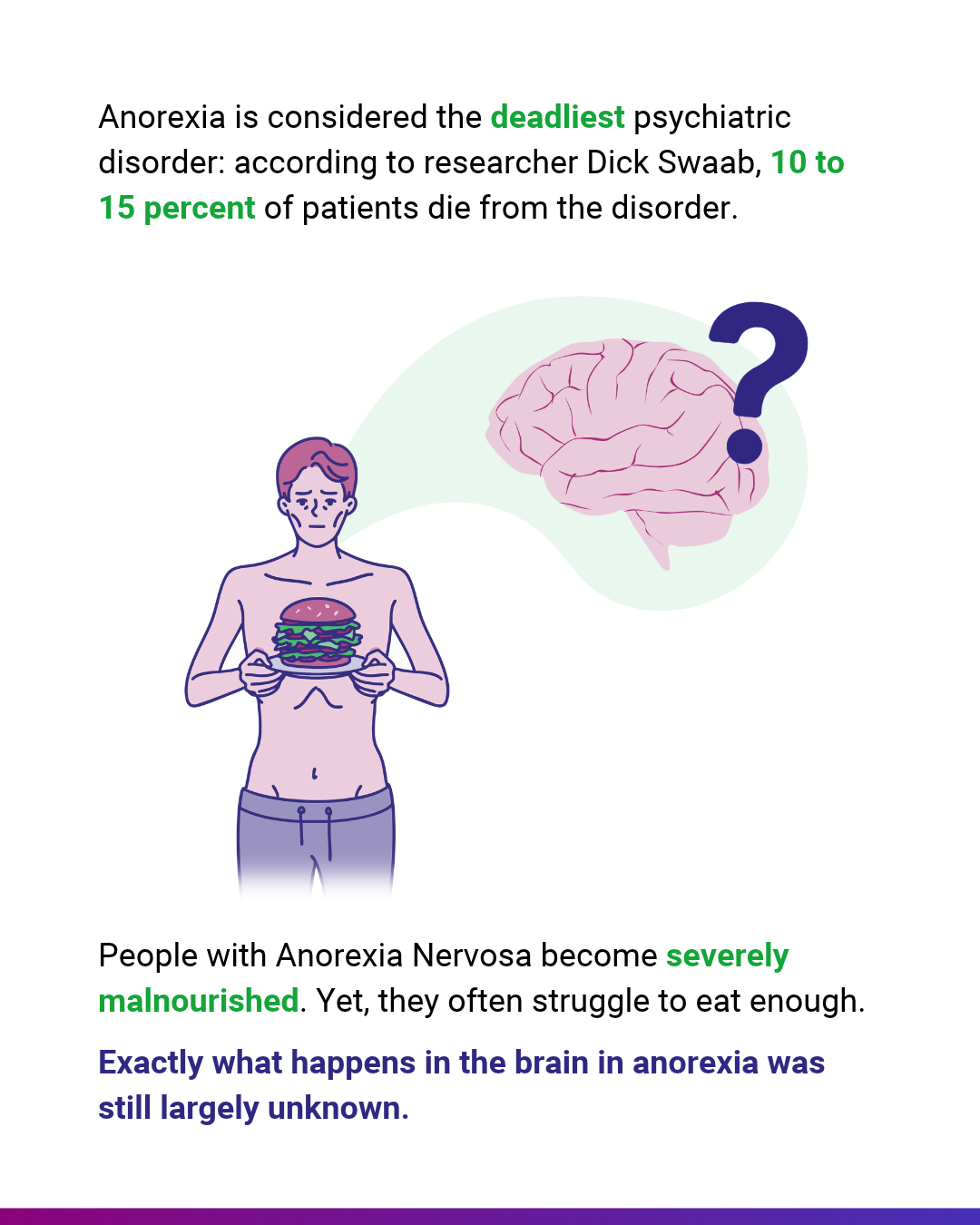
Anorexia nervosa is a serious eating disorder in which a person severely restricts their food intake and is often preoccupied with body weight and eating. The disorder can have major consequences for the body and is one of the psychiatric disorders with the highest risk of death. To better understand and treat anorexia, it is therefore important to understand what exactly happens in the brain.
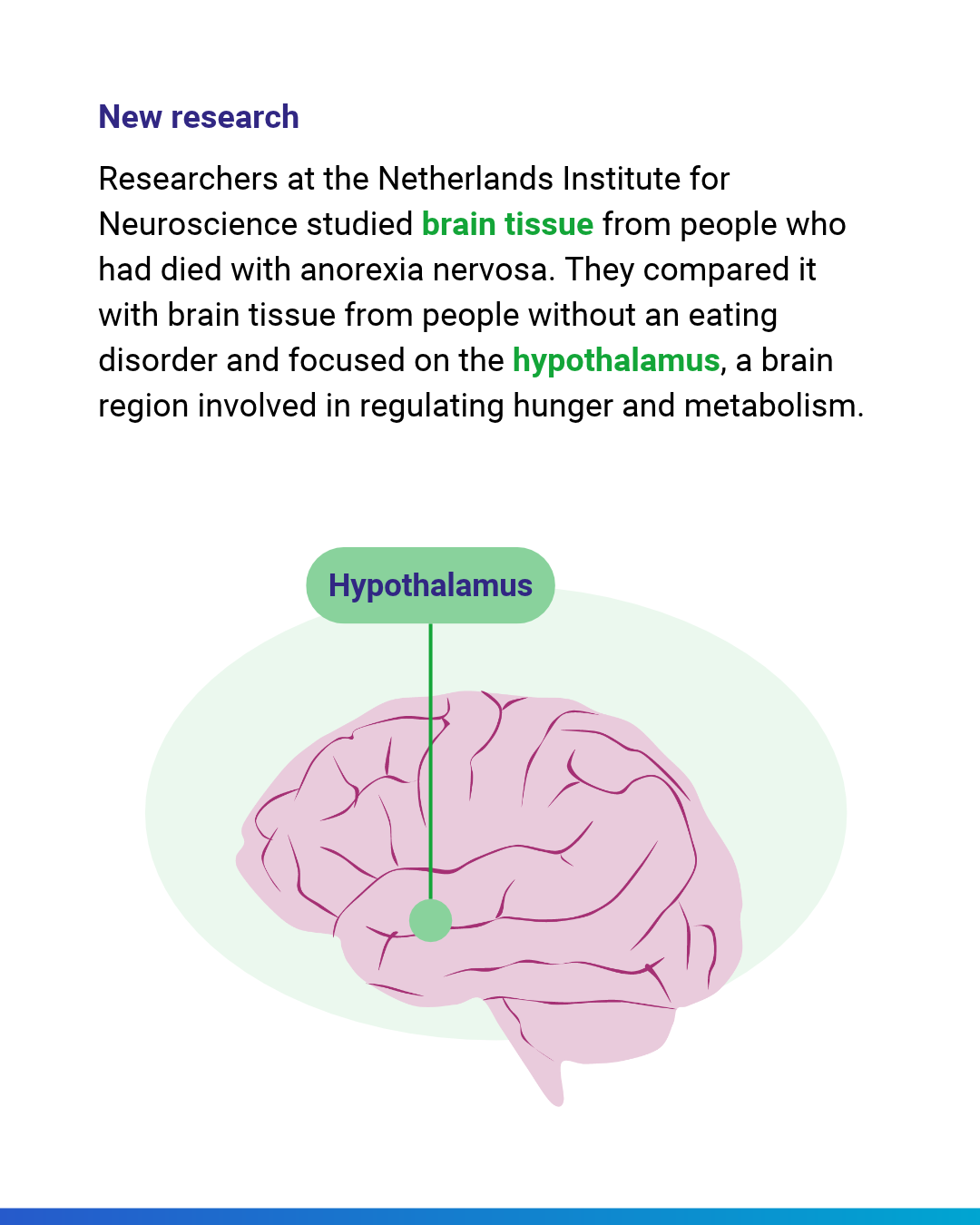
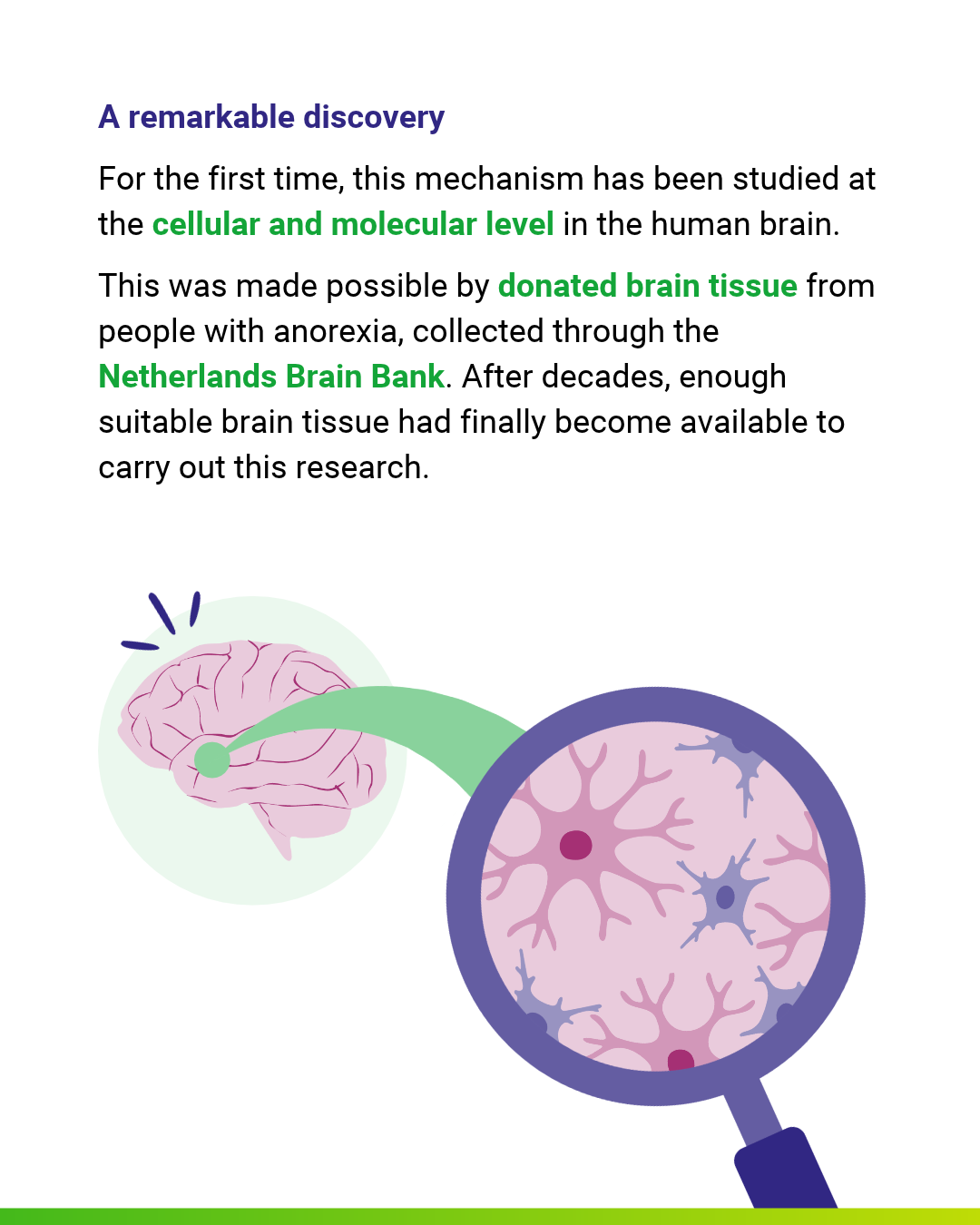
To investigate this, the researchers compared donated brain tissue from people with anorexia with brain tissue from donors without an eating disorder. They focused on the hypothalamus, a brain region that regulates hunger, eating behaviour and metabolism.
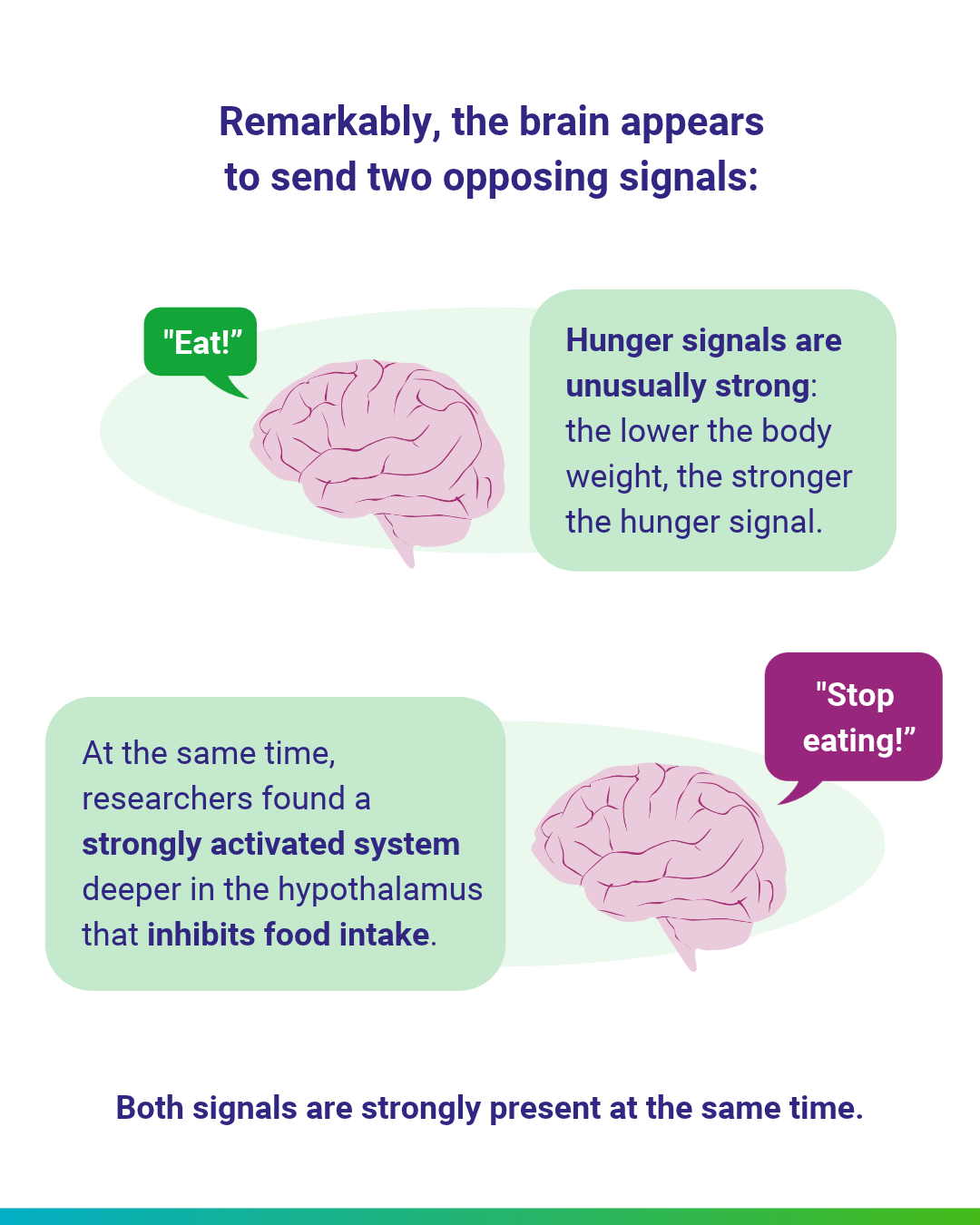
In people with anorexia, signals that stimulate eating were nevertheless remarkably strong. The researchers also found a clear relationship with body weight: the lower the body weight, the stronger this signal. “It was a fantastic correlation, the best I have ever seen,” says researcher Dick Swaab. “The brain registers that food needs to be eaten.”
However, elsewhere in the hypothalamus, the researchers found an activated system that suppresses eating behaviour. In anorexia, two opposing processes therefore appear to exist side by side in the brain: one promotes eating, while the other suppresses food intake. This conflict may help explain why eating can remain so difficult despite strong hunger signals.
The study shows that processes in the hypothalamus can influence eating behaviour independently of a person’s conscious desire to eat or not to eat. This builds on previous indications that the hypothalamus plays an important role in anorexia. For example, changes in mood, the menstrual cycle, thyroid function and fluid balance are common in people with anorexia – processes in which the hypothalamus plays an important role.
Although environmental factors, such as social pressure and beauty ideals, are thought to play a role in anorexia, the findings suggest that biological processes form an important basis of the disorder.
Thanks to brain donors
These insights were only possible thanks to donated brain tissue after death. Brain scans cannot reveal the molecular changes taking place in the small, specialised areas of the hypothalamus. People with anorexia rarely donate their brains to the Netherlands Brain Bank after death. As a result, it took decades to collect enough suitable tissue for this study.
It is not yet clear why the appetite-suppressing system becomes so strongly activated in anorexia. The researchers suspect that autoimmune processes may play a role, but further research is needed to establish this. Swaab says: “Observations like these really make treatment of anorexia possible. We are very close.”
Read the full original article on the Telegraaf website (in Dutch).
The Friends Foundation facilitates groundbreaking brain research. You can help us with that.
Support our work